Catalogue
782 dialfaces, one object page each
The repository is the object catalogue: photographs, 3D models, holder, inventory number and, where measured, the grade and the determined latitude. Of 694 objects, 113 carry a grade.
Digital edition · Gateway
A conic sundial turns the sun's path into a shadow on stone. The Berlin register holds 782 dialface entries of ancient sundials; 113 objects are measured on the 3D model and graded, and for 72 of them the latitude the dial was designed for can be read from the engraved lines. The figure shows how: choose a dial, a day and an hour, and watch the shadow of the nodus move on the hour network.
The 3D models belong to the Edition Topoi of the Berlin Sundial Collaboration; the licence is stated per object in the catalogue. The rights of the digitised literature are not cleared; this page shows excerpts only.
Catalogue
The repository is the object catalogue: photographs, 3D models, holder, inventory number and, where measured, the grade and the determined latitude. Of 694 objects, 113 carry a grade.
Story
Four short chapters: which surface the stone has, how 694 objects narrow down to 72 latitudes, how one dial, ObjID 126 from Delos, is read from several independent construction witnesses, and what the latitudes across the Mediterranean show.
Collection
The PDAI collection holds 7 works with 1,066 pages, among them the two volumes by Karlheinz Schaldach on the ancient sundials of Greece and a collection of sundial engravings of the 16th century.
Tools
An interactive animation shows the shadow on a conic sundial in three dimensions. A second viewer opens the 3D models of the objects.
Methodological approach
Every number on this page is read from the register, the PDAI collection or the papers when the page is built. If a source is missing, the build stops.
The register judges only what was measured. A fragment is not downgraded because parts are missing; the grade drops only for defects of the measurement itself. This page follows that rule.
403 dialface entries carry a place coordinate, 379 do not. The colour gives the surface type stated by the catalogue.
Six objects with a measurement record. Each card leads to the object page in the repository, with photographs, the 3D model and the measured values.
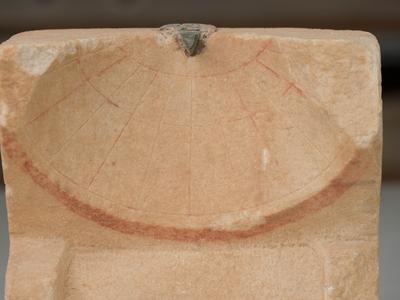 ObjID 126 · Delos, Inv. Nr. B3652 (11023)Archaeological Museum of DelosConefit cone: decisiveGrade Aφ 37.97°Open object page
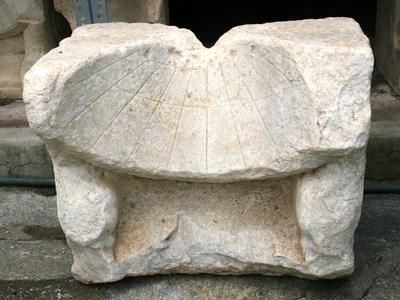 ObjID 128 · Delos, Inv. Nr. A7812Archaeological Museum of DelosConefit cone: decisiveGrade Aφ 43.61°Open object page
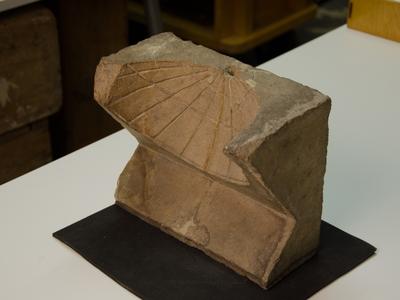 ObjID 18 · London, Inv. Nr. 2547 Reg. no. 1893,0713.13British MuseumSpherefit cone: not decisiveGrade Bφ 41.45° provisionalOpen object page
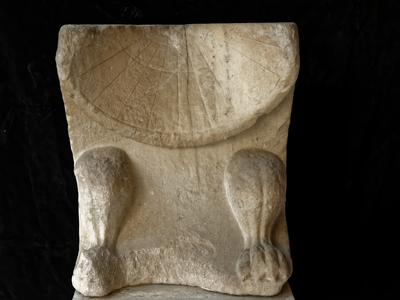 ObjID 117 · Athens, Inv. Nr. 3156National Archaeological Museum of AthensConefit cone: decisiveGrade Bφ 34.48°Open object page
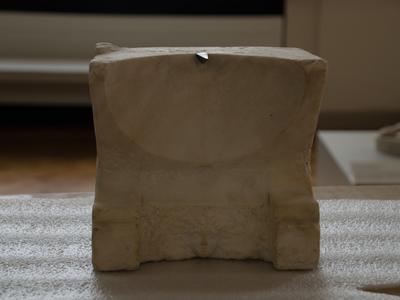 ObjID 108 · Berlin, Inv. Nr. 1048Staatliche Museen zu BerlinConefit cone: decisiveGrade Bφ 33.31°Open object page
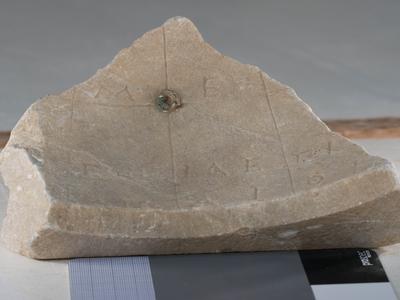 ObjID 2 · Delos, Inv. Nr. 133Archaeological Museum of DelosSpherefit sphere: decisiveGrade AOpen object page
For each of the 72 dials with a determined latitude the register computes the sun's noon altitude, the day length and the length of a seasonal hour at the solstices and the equinox, with the obliquity of the ecliptic of the year −100 (23.71°). Choose the quantity; each dot is one object, the lines are the geometric curves for comparison. A click opens the object page.
The latitude is the latitude the dial was designed for, not that of its find-spot. A dial may have been made for another klima than the one where it was found. ObjID 128 is a find from Delos, yet the register assigns its latitude of 43.61° to the klima of Massalia.
A fragment of a cone dial without and with the detected lines, the witnesses of the latitude of the Delos dial, and pages from the literature.
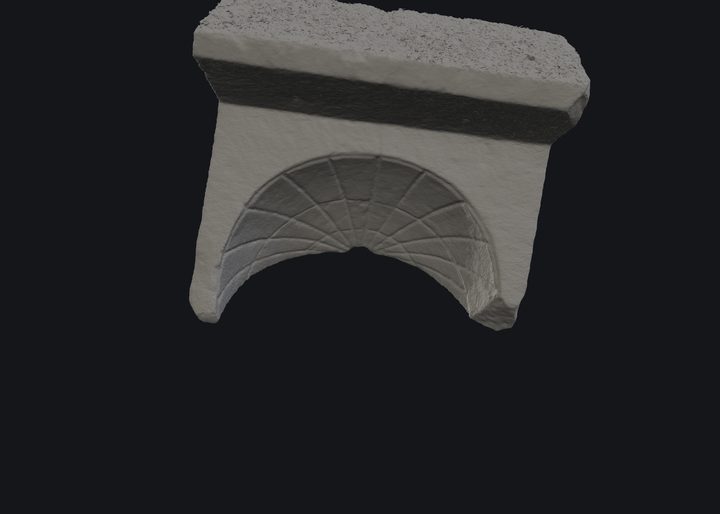 ObjID 18, 3D modelFragment of a conic sundial in the British Museum (inv. 2547), view of the model without overlay.
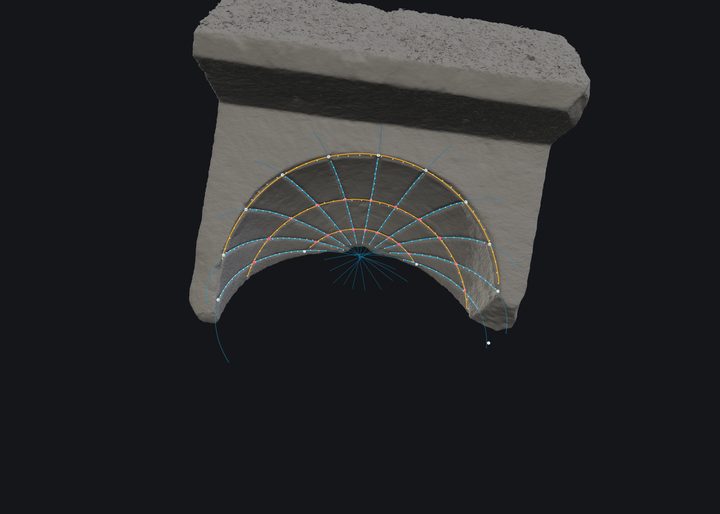 ObjID 18, detected linesThe same model with the detected lines; the measured values come from them.
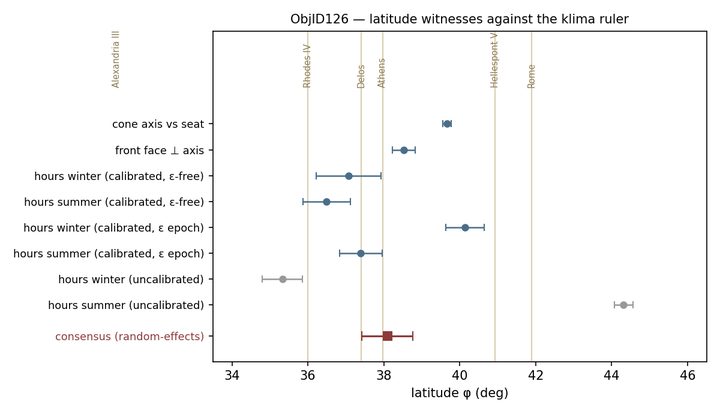 ObjID 126, witnesses of the latitudeLatitude estimates of the individual construction paths compared with the klimata; the consensus below.
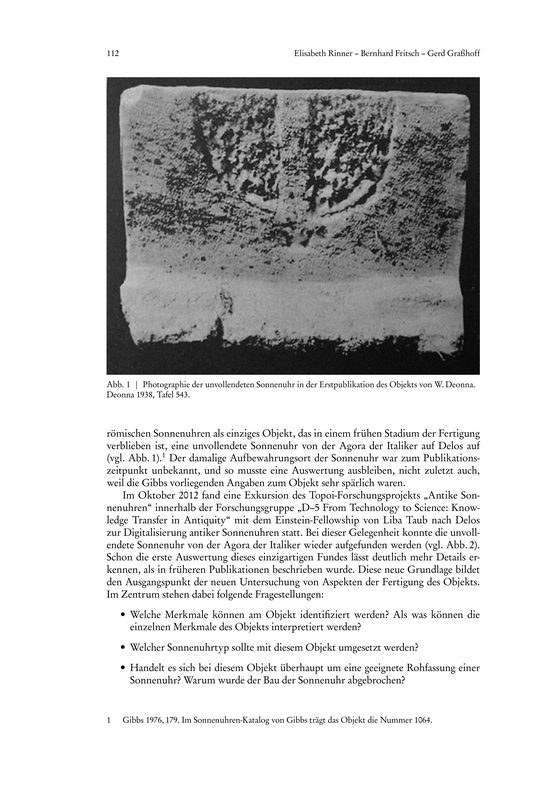 Delos, page 112The unfinished sundial of the Agora of the Italians. Photograph from the first publication by W. Deonna 1938, in Rinner, Fritsch and Graßhoff, eTopoi 2 (2012/2013).
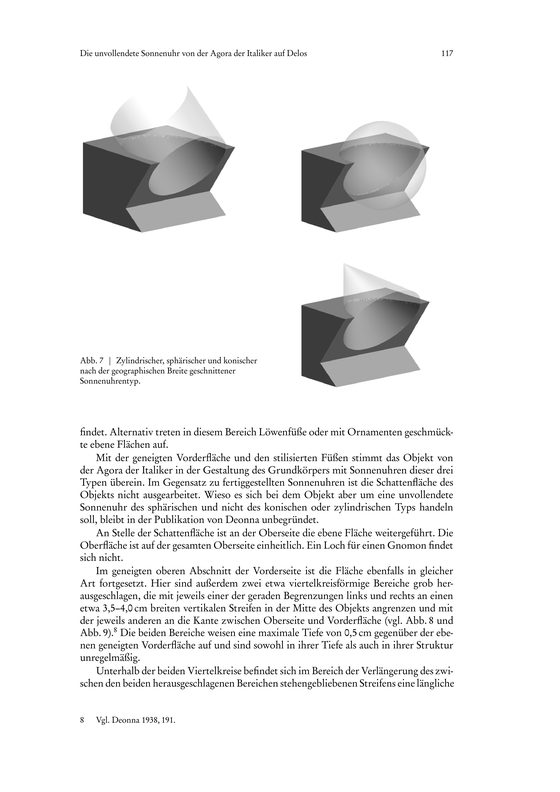 Delos, page 117Cylindrical, spherical and conic sundial type, cut by the geographical latitude.
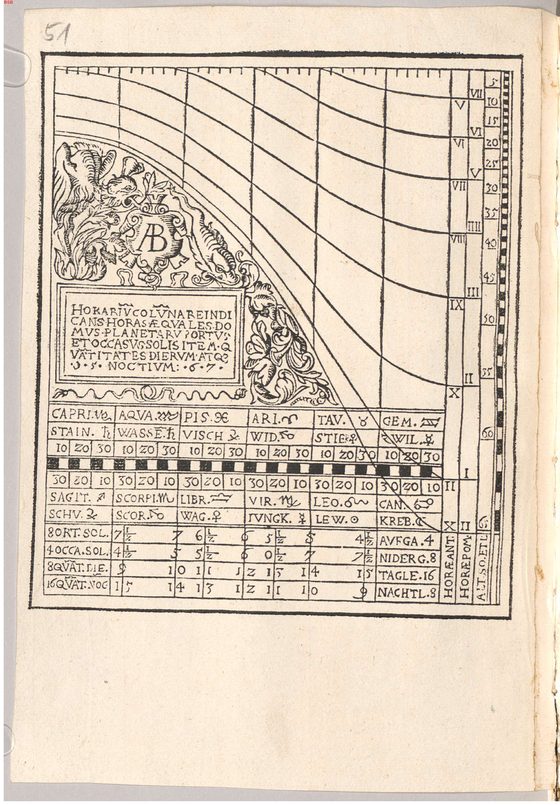 Hartmann, digitisation page 100Engraving of a sundial with a Latin heading and a table by months, from the collection of Georg Hartmann (16th century).
Seven papers are the supplements S1 to S7 of the repository. They carry the derivations behind the figures of this page: construction geometry, feature detection, model fitting, two worked examples and the method. Each entry says which claim it supports. All are drafts in alpha version and unpublished.
A Research Programme in Construction Geometry, Measurement, and Literate Coding
Supports: programme behind the measurement panel and astronomical picture · 7 pages
The research task is to recover, from photogrammetric models of ancient conic sundials, the construction proportions in which the instruments were designed. This paper states the programme, reviews the June 2026 drafts on the research volume, and records the governing correction: the three seasonal meridian marks determine the cone and do not determine the latitude.
An Analytical Framework for Shadow Projection and Apex-Free Parameter Recovery on an Inclined Cone
Supports: shadow animation and astronomical picture · 15 pages
A conic sundial with its nodus on the polar axis is determined by three construction choices: the klima, the opening of the cone, and a scale. The three seasonal meridian marks determine the cone independently of latitude. Latitude is recovered from the hour division of the solstitial circles or from the dressed planes. A closed-form marking ratio Q recovers the half-angle without the apex being identified.
From Groove Morphology to Geometric Primitives via Cross-Sectional Profile Analysis
Supports: detected hour and day lines on object pages · 5 pages
A three-level hierarchical framework for automated feature perception on stone dialfaces: physical groove cut, medial centreline coordinate across sliced cross-sectional profiles, and geometric primitive fitting. Evaluated on ObjID 18 (BM inv. 2547) and ObjID 126 (Delos).
Nonlinear Parameter Estimation for Conic Sundial Reconstruction from 3D Scan Data
Supports: cone fit and latitude estimates of the measurement panel · 5 pages
Nonlinear parameter estimation methods for recovering the 7-parameter cone model from 3D scan data following Bard's estimation framework. Compares Nelder-Mead, TRF, and L-BFGS-B, resolving partial-arc degeneracy via coaxial constrained estimation.
Construction Witnesses, Consensus Estimation, and the Proportions of Dialface ObjID 18 (British Museum inv. 2547)
Supports: worked example, object page ObjID 18 · 10 pages
Empirical deduction of construction proportions from the 3D surface model of Dialface ObjID 18 (BM inv. 2547). Evaluates four independent construction witnesses, calibrating the engraved angular unit and establishing the consensus latitude phi = 41.45 deg (Rome/Hellespont klima) with workshop rule x = 1:4 (12:15:20).
A Geometrically Explicit Estimation with Stated Assumptions and Defendable Confidence Intervals
Supports: worked example, object page ObjID 126 · 6 pages
Analysis of the 3D model of Dialface ObjID 126 from the Archaeological Museum of Delos. Isolates a +5.27% angular unit distortion via the equinoctial invariant HE = 90 deg, recovering the intended design latitude phi = 38.01 deg (Delos/Athens klima).
Complexity Reduction through Structured Context, Executable Specification, and Closed-Loop Refinement
Supports: how the measurement pipeline was built and checked · 5 pages
A research methodology unifying Knuth's literate programming with autonomous AI agent capabilities. Employs a 3-level operational model (living reference background, structured planning substrate, agentic action) in a closed feedback loop on 3D sundial reconstruction.
Works of the PDAI collection sundial, with the page counts of the digitisation.
| Short title | Title | Year | Pages |
|---|---|---|---|
| Graßhoff et al. 2015 | The construction principles of ancient Greek sundials | 2015 | 8 |
| Rinner et al. 2013 | Die unvollendete Sonnenuhr von der Agora der Italiker auf Delos | 2013 | 22 |
| Rinner 2017 | Ancient Greek Sundials and the Theory of Conic Sections Reconsidered | 2017 | 18 |
| Schaldach 2012 | Eine Sonnenuhr und ihr Postament: zwei Funde vom römischen Heiligtum auf dem Martberg (Lkr. Cochem-Zell) | 16 | |
| Schaldach 2021 | Die antiken Sonnenuhren Griechenlands, Band 1: Die Funde in historischer Sicht (BSAW 76/1) | 2021 | 297 |
| Schaldach 2022 | Die antiken Sonnenuhren Griechenlands, Band 2: Kataloge, Analysen, Texte (BSAW 76/2) | 2022 | 380 |
| Hartmann, 16th c. | Collectio figurarum: Kupferstiche und Holzschnitte von Sonnenuhren (Georg Hartmann) | 325 |
What this page shows comes from the following sources.
The catalogue of 782 dialface entries with metadata, and the measurement export with grade, surface fit, latitude and cone angle per object.
A DuckDB file with objects, features, intersections, quantities and checks; it is read read-only. The astronomical picture is computed from it.
Papers, two volumes by Karlheinz Schaldach and an engraving collection of the 16th century.
Supplements S1 to S7, typeset as PDF.