
Ancient Sundials

‹ Ancient Sundials

Dialface ID 329

Abstract

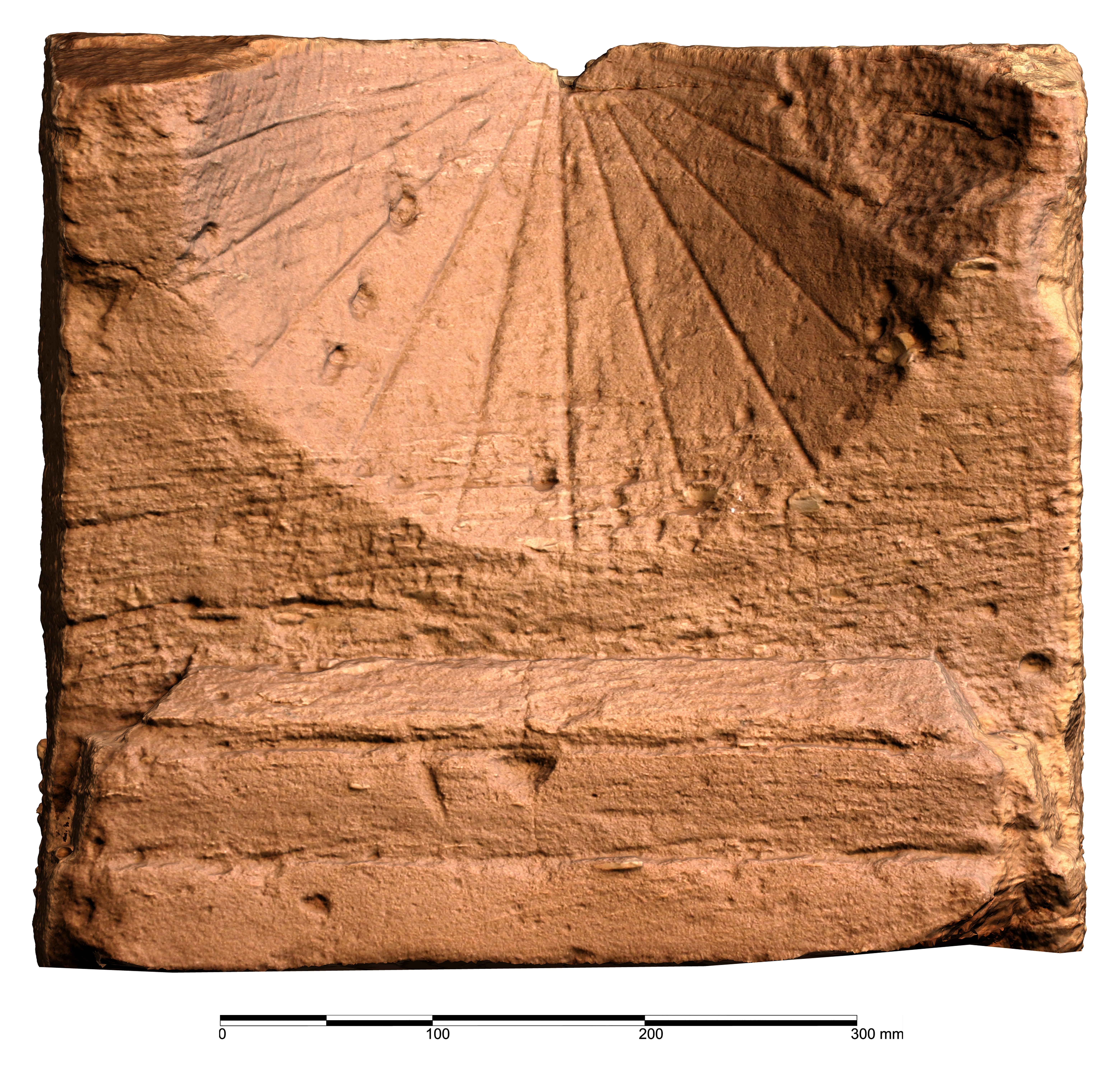
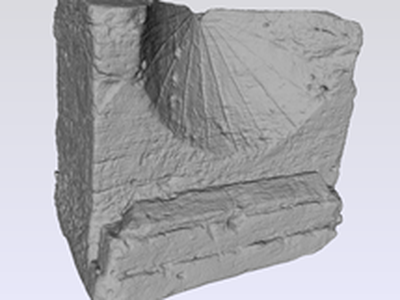
Kroeper: Two faces of the stone are worked, one has a plane angled surface, the opposite side a conoidal face. Both sides have 12 radial lightly engraved lines on their respective surfaces emanating from the top edge of the stone downward. At the top of the stone is a hole in which originally the shadow throwing, probably, metal rod was placed. Of particular interest in this example are the two faces (PI. V, fig. 1), one for normal use oriented with the face to the south, the other for use near the summer solstice (oriented north). blogspot.com: The hour marks are set on two opposing sides of this sandstone block. The top side has a cavity for the gnomon.

Measurements

Measurement record: pipeline ObjID 193, matched to this dialface by inventory number.

This object is registered in the measurement database, but its own record holds no measured values.
References

  • – Gamer-Wallert, I., Zibelius, K., Der Löwentempel von Naqca in der Butana (Sudan), I: Forschungsgeschichte und Topographie, 1983
  • – Scheidt, Walter R., Stationäre Sonnenuhr mit konischer und äquatorialer Anzeigefläche, 2005, p. 1.
  • – Wildung, Dietrich, Schoske, Sylvia, Die Stadt in der Steppe : Grabungen des Ägyptischen Museums Berlin in Naga, Sudan. Katalog zur Ausstellung des Ägyptischen Museums und Papyrussammlung, Staatliche Museen zu Berlin Preußischer Kulturbesitz im Stadtmuseum Ingolstadt, 9. April - 18. Juli 1999, Berlin, 1999, p. 64.
  • – Catamo, Mario, Lanciano, N., Locher, K., Lombadero, M., Valdes, M., Fifteen Further Greco-Roman Sundials from the Mediteranean Area and Sudan, 2000, p. 220.
  • – Winter, Eva, Zeitzeichen. Zur Entwicklung und Verwendung antiker Zeitmesser, Berlin and Boston, 2013, p. 435f.

3D Models

DOI

10.17171/1-1-2448

Citation

Berlin Sundial Collaboration, Ancient Sundials, Dialface ID 329, Unknown, 2014, Edition Topoi, DOI: 10.17171/1-1-2448

Citable

Download