ObjID264-1

ObjID264-1
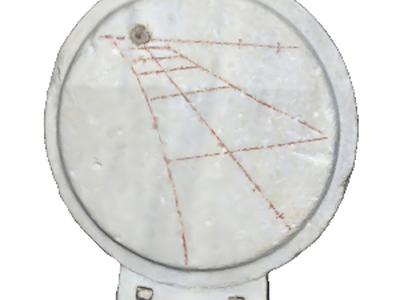
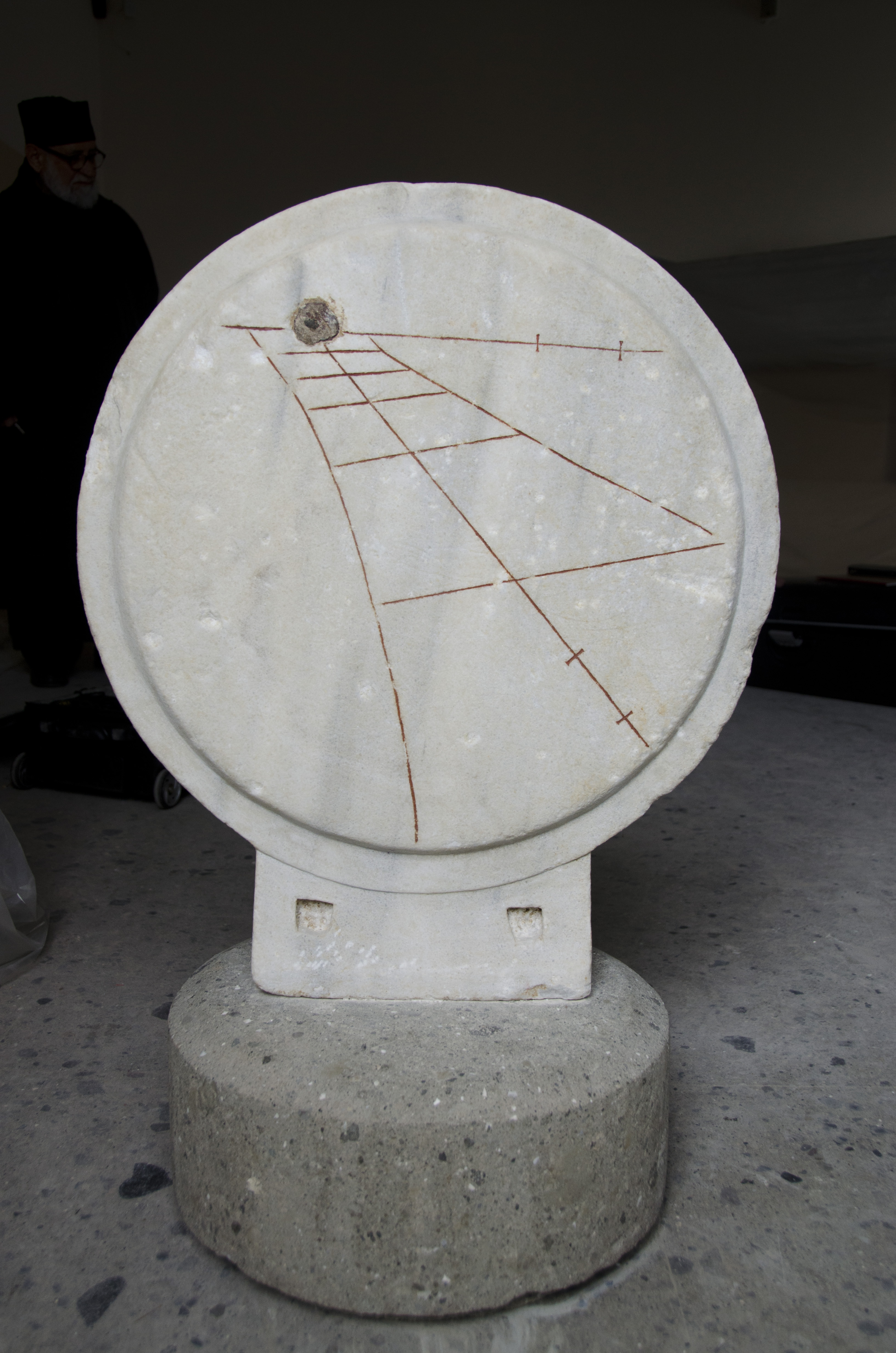
Gibbs: Lost; Photographs of this dial (negative numbers 54820 and 54821) indicate that it consists of a vertical disk facing east and west. Unfortunately attempts to locate it in the museum´s study collection on the summer of 1971 were unsuccessful. Bonanome: It is disc-shaped with two flat surfaces, only slightly raised with respect to the outer rim. The corbel at the base gives its vertical position, and there is still a trace of the sockets used to secure it to an underlying support – now lost – to assure elevation and visibility. The flat surfaces of this solar instrument have been carved and “rubricated” (i.e., coloured in red) to make their reading easier, since they acted as sequential dials. This means that a dial is designed to be faced to the East, in order to show the morning hours, whereas the other is faced to the West and shows the afternoon hours.; Adam/Severino: Three day curves and six hour lines (including horizon line) are visible.
Measurement record: pipeline ObjID 264, matched to this dialface by inventory number.
This object is registered in the measurement database, but its own record holds no measured values.