ObjID214-1

ObjID214-1
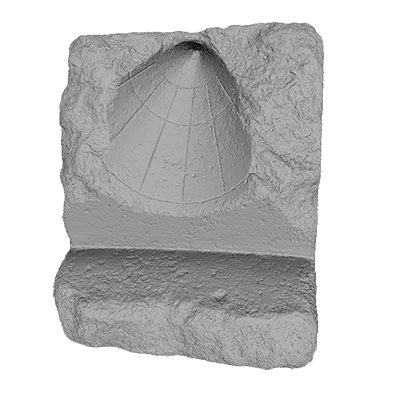
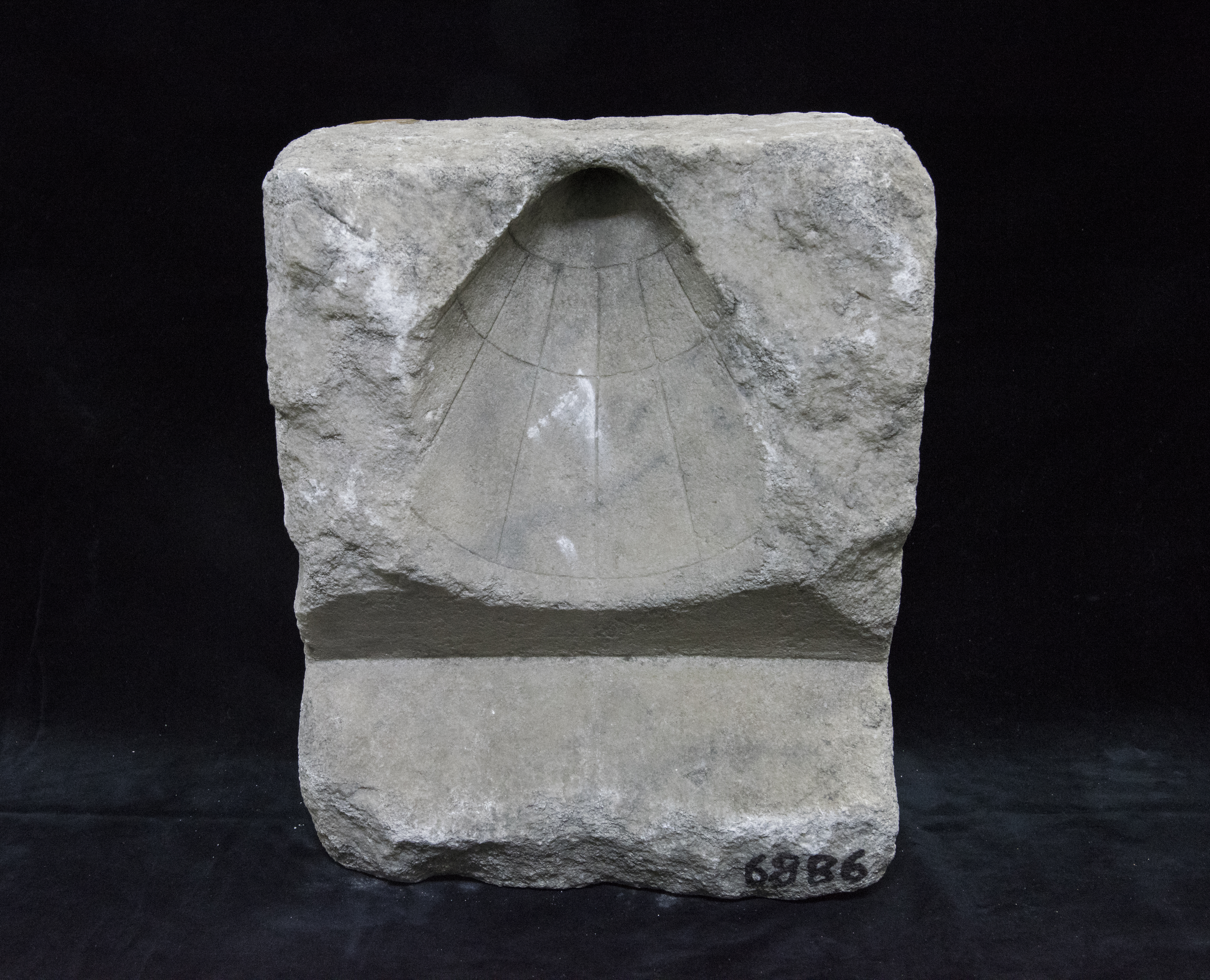
The unique shape of this dial face is shown in the adjoining meridian section. The surface is conical, possibly a complete right circular cone. The vertex of the conical surface is carved out of the stone. Its position is marked by a shallow, square, depression which contains no metal. The generator of the conical surface is horizontal at the meridian. Seven preserved hour lines, containing traces of black coloring, cross three day curves, but do not extend beyond either solstice. The day curves do not seem to be parallel to each other, and certainly the summer solstice is not always equidistant from the lower edge.
Measurement record: pipeline ObjID 214, matched to this dialface by inventory number.
This object is registered in the measurement database, but its own record holds no measured values.