ObjID211-1

ObjID211-1
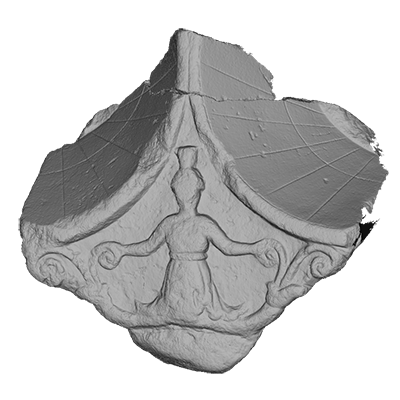
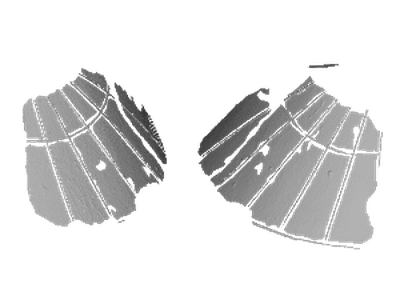
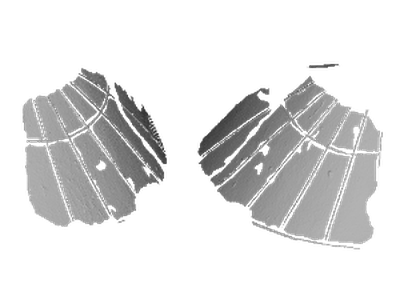
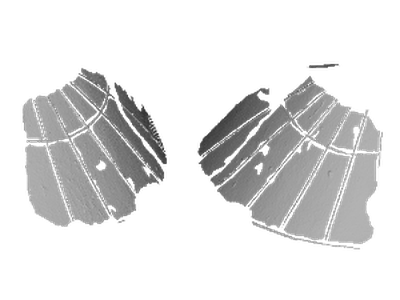
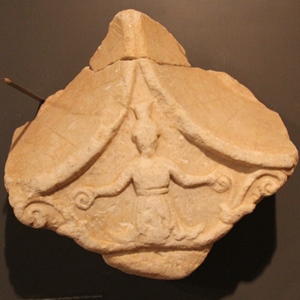
At the top left corner of the dial, above the left meridian, there is a gnomon hole containing some trace of lead fill. The shadow-receiving surface of this dial is essentially that of a section of truncated cone which has been split at the meridian and transposed before being cut into the stone. Rather than continuing smoothly to the top of the dial, the conical surface is cut off above the winter solstice by a rough protrusion on each side. Six hour lines, including the meridian, are crossed by three day curves within each dial half. The summer solstice is distinct from the lower edge, but the winter curve is marked only by the junction of the smooth conical surface with the rough protrusion. The center front surface of the dial has been decorated with a relief showing a priestly figure wearing a polos and a flowing robe, reaching for the tendrils of a symmetrically framing plant.
Measurement record: pipeline ObjID 211, matched to this dialface by inventory number.
| Quality grade | B (completeness 48 %) |
|---|---|
| Dial surface | cone (decisive) · fit residual mm: cone 8.03, cylinder 18.57, sphere 15.53 |
| Latitude φ | no latitude determined |
| Engraved lines | 11 hour lines, 2 day lines |
| Cone half-angle α | not shown: the derived cone does not agree with the measured points (residual 41.0 mm; verified cones give under 1 mm); under review |
| Measured | 2026-06-12 20:36 |