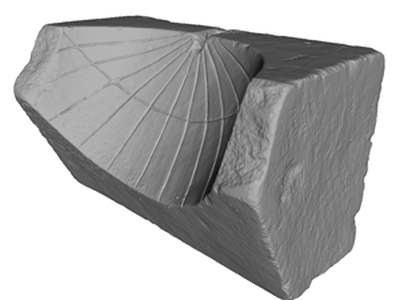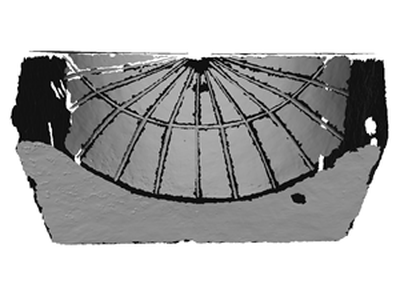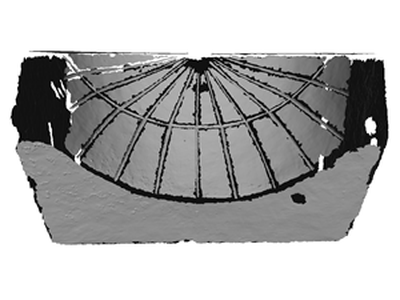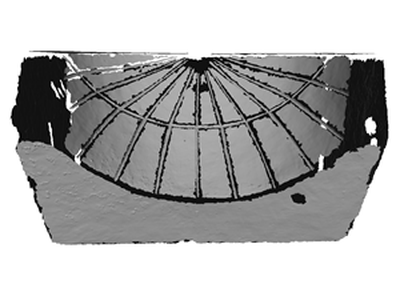
ObjID177-1

ObjID177-1
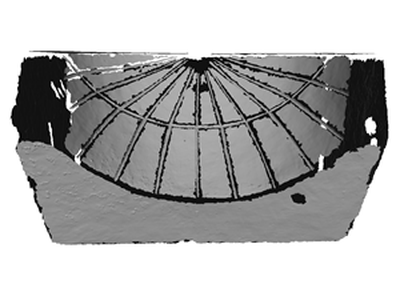
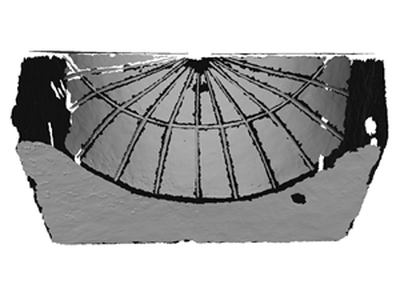
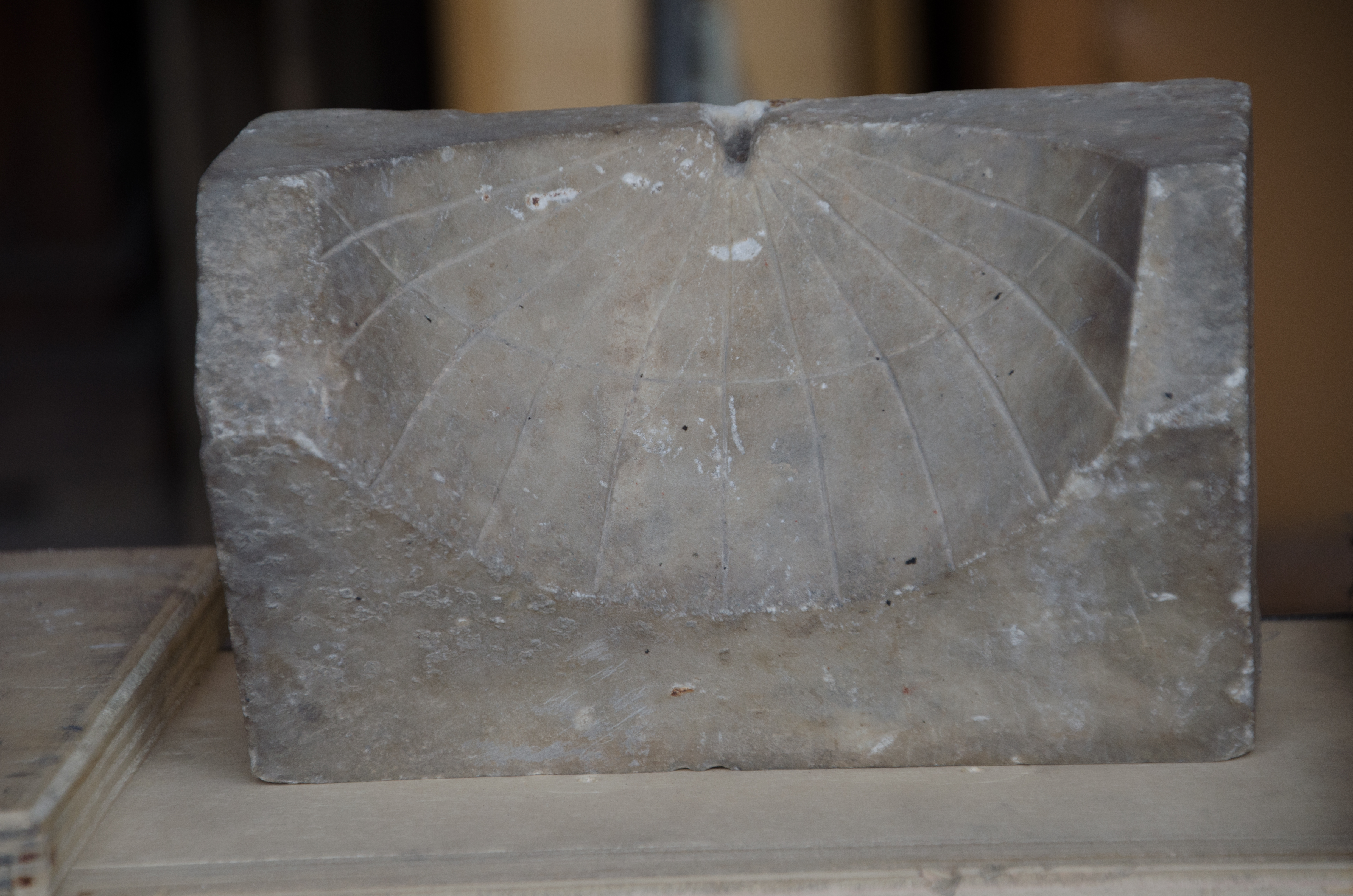
Eleven hour lines radiate from the gnomon hole across the equinox to the lower edge of the shadow-receiving surface.
Measurement record: pipeline ObjID 177, matched to this dialface by inventory number.
| Quality grade | B (completeness 42 %) |
|---|---|
| Dial surface | cone (preferred, not decisive) · fit residual mm: cone 1.38, cylinder 1.42, sphere 2.47 |
| Latitude φ | 28.26 ± 0.03° (consensus of witnesses) |
| Klima | nearest Alexandria (109.4 sigma) |
| Engraved lines | 11 hour lines, 1 day lines |
| Cone half-angle α | 10.4° (cone residual on all points 1.37 mm) |
| Measured | 2026-06-12 21:03 |
| Winter solstice | Equinox | Summer solstice | |
|---|---|---|---|
| Noon altitude of the Sun | 38.0° | 61.7° | 85.4° |
| Noon shadow (gnomon heights) | 1.28 | 0.54 | 0.08 |
| Length of the day | 10.2 h | 12.0 h | 13.8 h |
| Length of a seasonal hour | 51 min | 60 min | 69 min |
Computed for the measured latitude with the obliquity of the JPL ephemeris at 101 BC (year -100). The latitude is the one the dial was made for, not a find-spot coordinate.