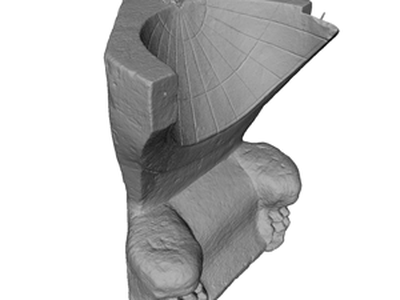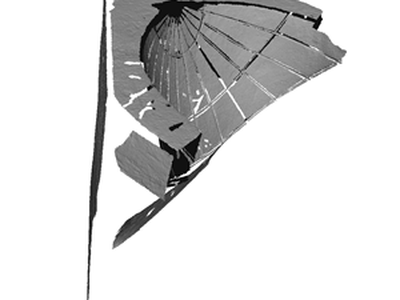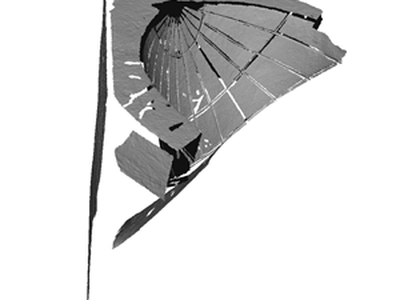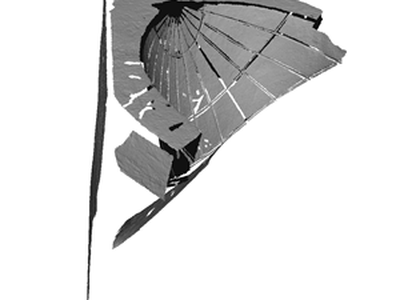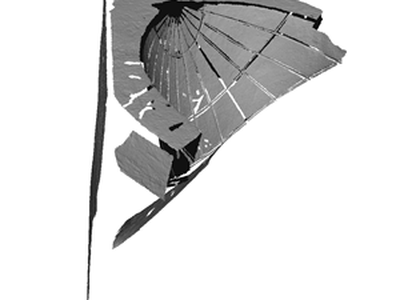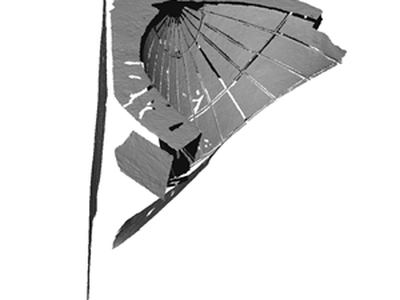
ObjID175-1

ObjID175-1
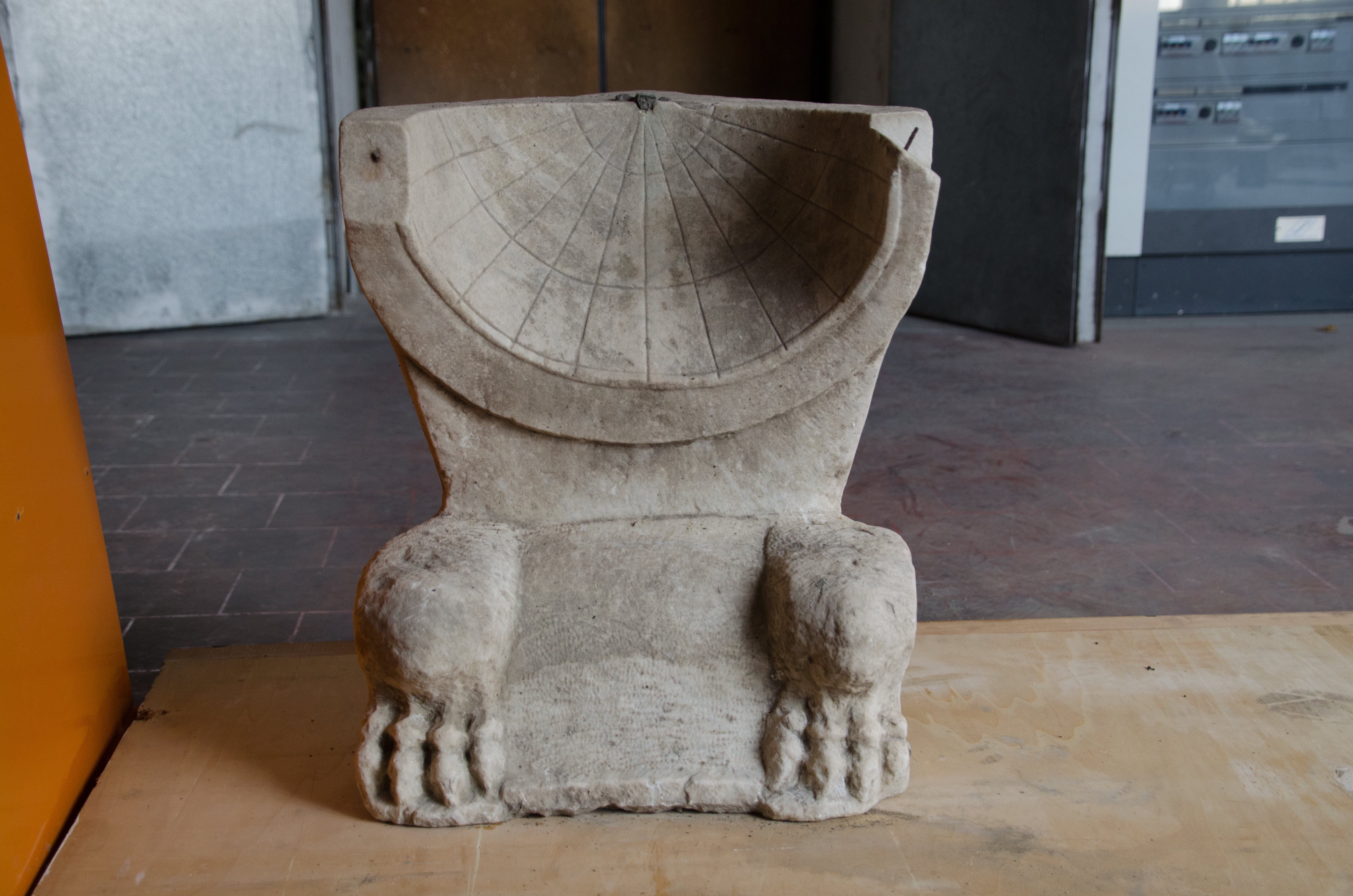
The base of a bronze gnomon remains in lead fill at the top of the dial. Eleven hour lines extend from the gnomon groove to the lower edge of the conical surface. Three day curves cross these hour lines. A 52 mm wide lip emphasizes the circular section in the oblique front of the dial. Two four-toed lion feet flank the base. The left and right sides meet at the back of the dial forming a dihedral angle equal to 88.
Measurement record: pipeline ObjID 175, matched to this dialface by inventory number.
| Quality grade | B (completeness 95 %) |
|---|---|
| Dial surface | cone (preferred, not decisive) · fit residual mm: cone 3.18, cylinder 3.29, sphere 9.93 |
| Latitude φ | 39.82 ± 1.38° (consensus of witnesses) |
| Klima | Hellespont (V), Athens, Rome |
| Engraved lines | 11 hour lines, 3 day lines |
| Cone half-angle α | not shown: the derived cone does not agree with the measured points (residual 18.4 mm; verified cones give under 1 mm); under review |
| Measured | 2026-06-12 20:31 |
| Winter solstice | Equinox | Summer solstice | |
|---|---|---|---|
| Noon altitude of the Sun | 26.5° | 50.2° | 73.9° |
| Noon shadow (gnomon heights) | 2.01 | 0.83 | 0.29 |
| Length of the day | 9.1 h | 12.0 h | 14.9 h |
| Length of a seasonal hour | 46 min | 60 min | 74 min |
Computed for the measured latitude with the obliquity of the JPL ephemeris at 101 BC (year -100). The latitude is the one the dial was made for, not a find-spot coordinate.