
Ancient Sundials

‹ Ancient Sundials

Dialface ID 171

Abstract

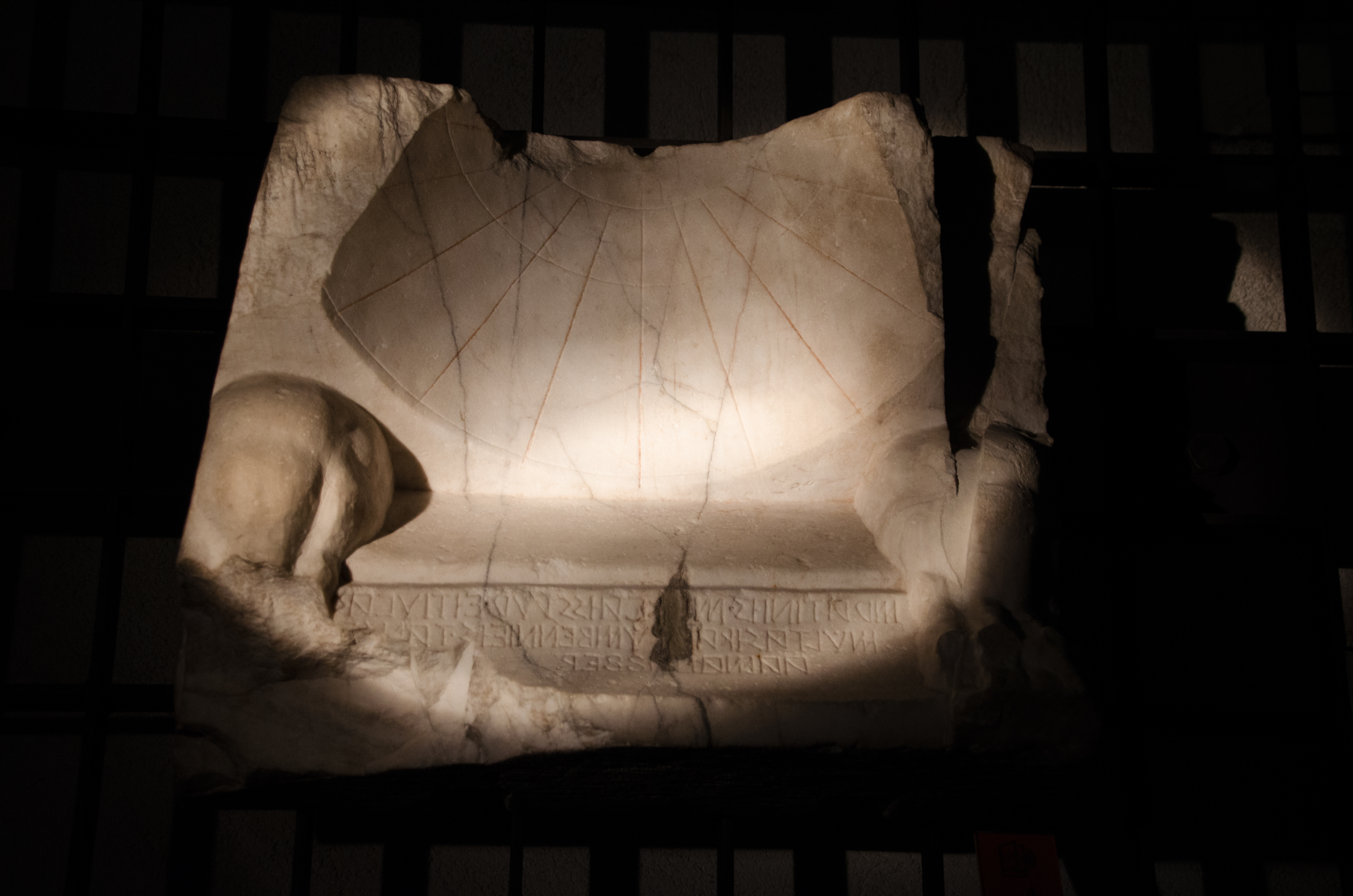
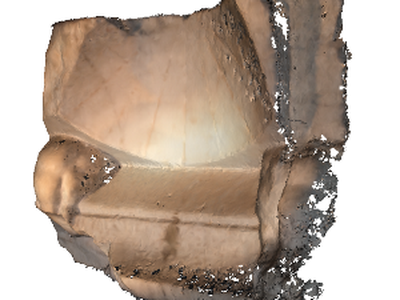
A lead-filled gnomon hole is visible in the top surface of the dial. Of the eleven hour lines, only the meridian extends from the gnomon groove to the lower edge of the conical surface; although some other hour lines do seem to extend beyond the summer solstice. In addition to the summer solstice, both the equinox and the winter solstice are represented by engraved lines. Sprouting calyx, flower and curling tendril are carved in low relief on the sides of the dial. Two lion feet flank a base inscribed with an Oscan inscription.

Measurements

Measurement record: pipeline ObjID 173, matched to this dialface by inventory number.

This object is registered in the measurement database, but its own record holds no measured values.
References

  • – Diels, Herrmann, Antike Technik, Leipzig and Berlin, 1920, p. 175 f, plate 14, 2 (drawing).
  • – Gibbs, Sharon L., Greek and Roman Sundials, New Haven and London, 1976, p. 291, p. 292, plate 46.
  • – Quaranta, B., L´Orologio a Sole di Beroso, Naples, 1854
  • – p. 52, no. 146.
  • – Overbeck, Johannes, Mau, August, Pompeji in seinen Gebäuden, Alterthümern und Kunstwerken, Leipzig, 1884, p. 459f., fig. 256.
  • – A., o., Real Museo Borbonico, Naples, 1831, Frontispiz.
  • – A., o., Real Museo Borbonico, Naples, 1857, 2, 14.
  • – Winter, Eva, Zeitzeichen. Zur Entwicklung und Verwendung antiker Zeitmesser, Berlin and Boston, 2013, Pompeji 1.
  • – Bonnin, Jérôme, La Mesure du temps dans l'Antiquité, Paris, 2015, A 107.

3D Models

DOI

10.17171/1-1-2147

Citation

Berlin Sundial Collaboration, Ancient Sundials, Dialface ID 171, Napoli, Inv. Nr. 2541, 2014, Edition Topoi, DOI: 10.17171/1-1-2147

Citable

Download