ObjID169-1

ObjID169-1
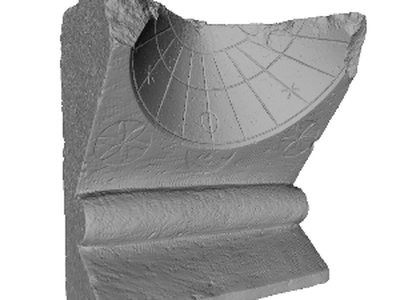
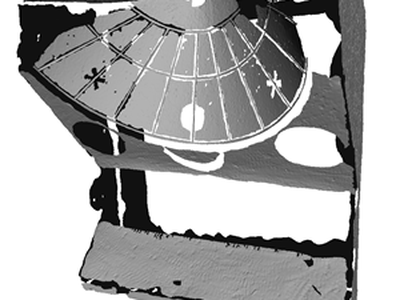
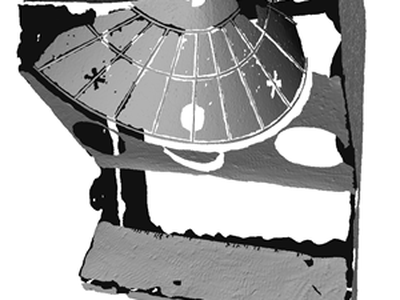
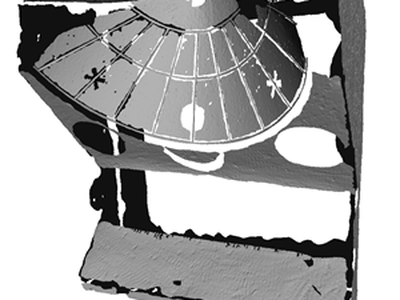
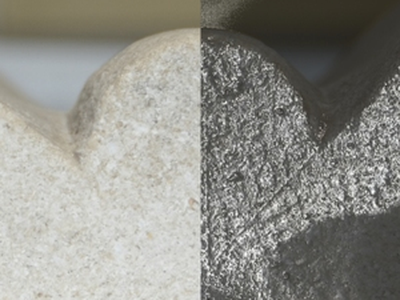
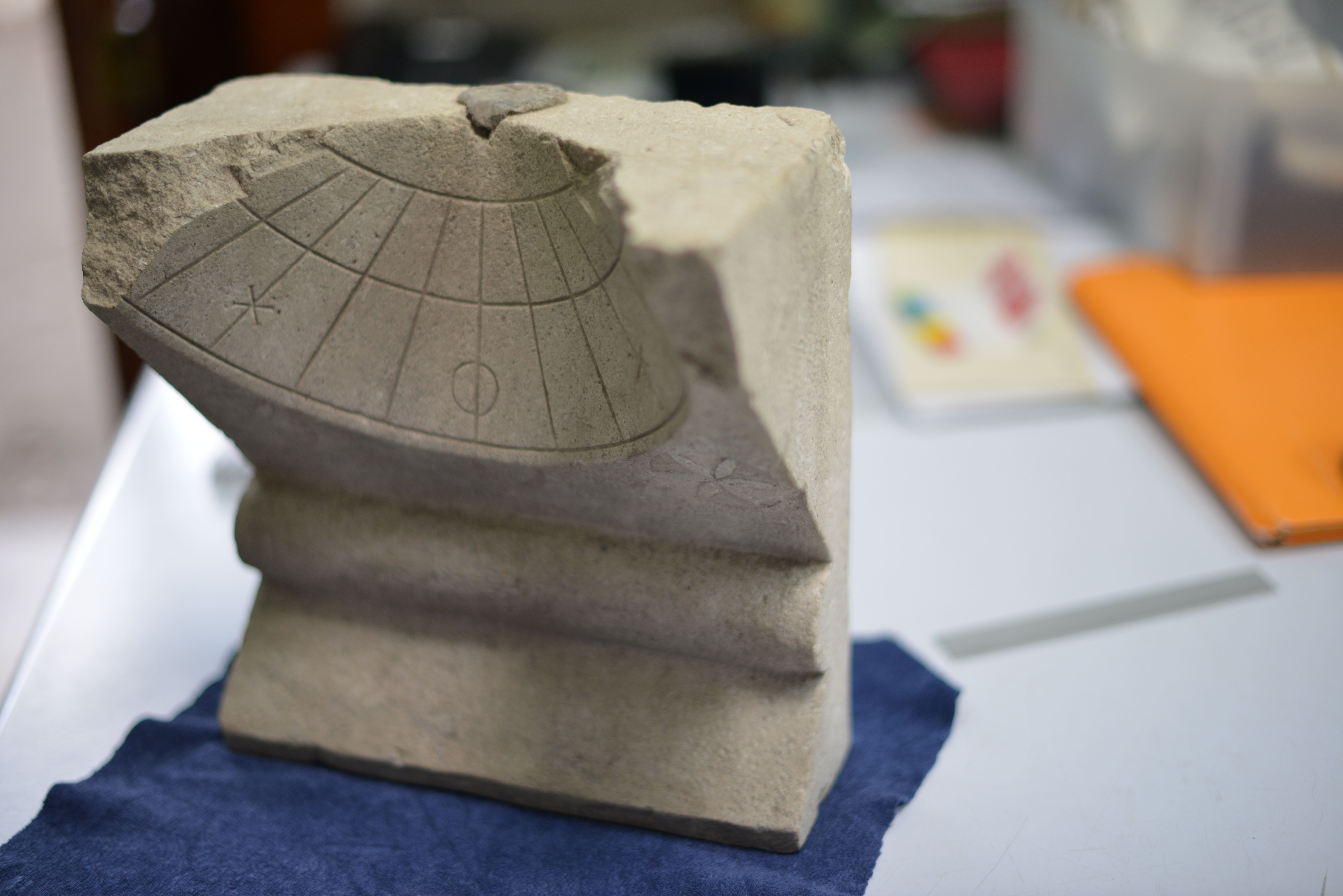
Lead fills the gnomon hole in the top surface of the dial. An 8 mm deep groove with sloping sides connects the hole with the front surface. The eleven hour lines do not continue beyond the winter solstice but continue lightly beyond the summer solstice. These two solstices are always equidistant from each other and from the lower edge. The third, sixth, and ninth hour lines are marked as shown in the plate. A crescent flanked by two six-leafed rosettes decorates the oblique front of the dial below the shadow-receiving surface. A half-cylinder molding separates this decorated face from the sloping base. Construction guide lines remain on the right side of the dial as shown in the diagram.
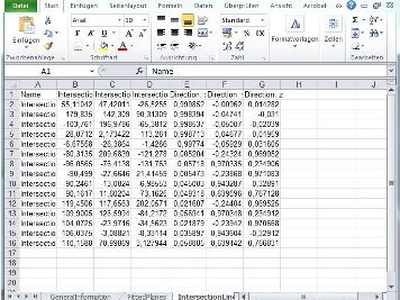
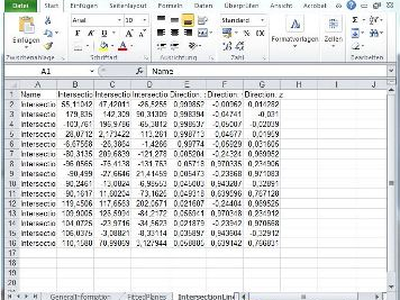
Measurement record: pipeline ObjID 169, matched to this dialface by inventory number.
| Quality grade | B (completeness 99 %) |
|---|---|
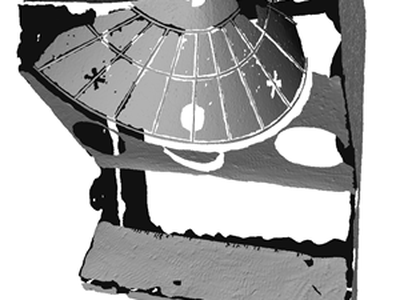
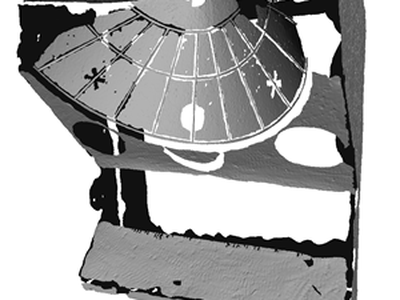
| Dial surface | cone (decisive) · fit residual mm: cone 0.70, cylinder 3.67, sphere 3.76 |
| Latitude φ | 35.19 ± 3.40° (consensus of witnesses) |
| Klima | Rhodes (IV), Delos, Athens |
| Engraved lines | 10 hour lines, 3 day lines |
| Cone half-angle α | 38.3 ± 0.13° (cone residual on all points 0.72 mm) |
| Measured | 2026-06-12 20:28 |
| Winter solstice | Equinox | Summer solstice | |
|---|---|---|---|
| Noon altitude of the Sun | 31.1° | 54.8° | 78.5° |
| Noon shadow (gnomon heights) | 1.66 | 0.70 | 0.20 |
| Length of the day | 9.6 h | 12.0 h | 14.4 h |
| Length of a seasonal hour | 48 min | 60 min | 72 min |
Computed for the measured latitude with the obliquity of the JPL ephemeris at 101 BC (year -100). The latitude is the one the dial was made for, not a find-spot coordinate.