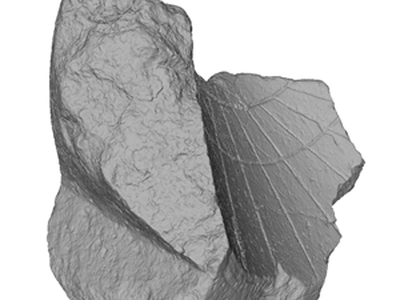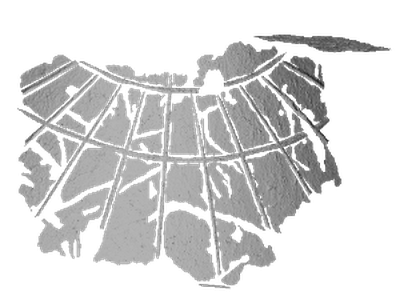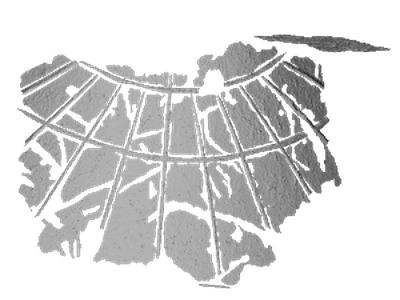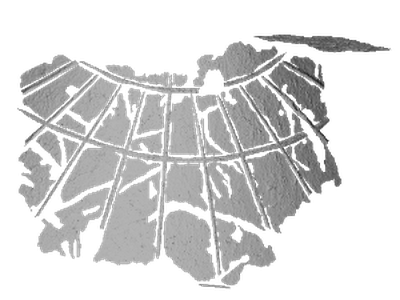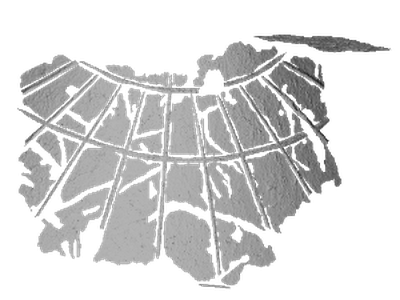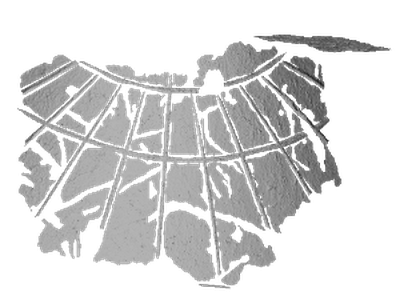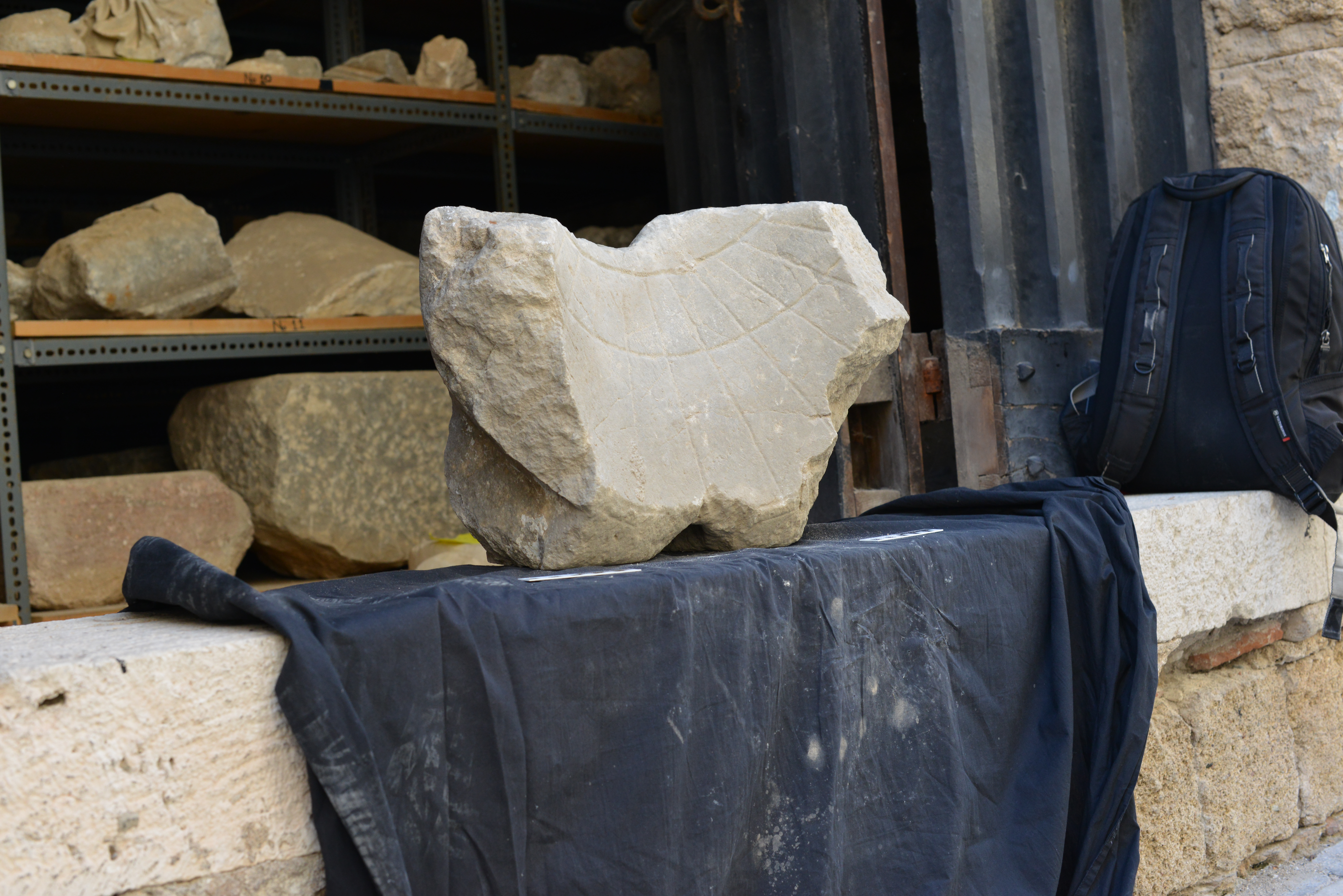
ObjID316-1

ObjID316-1
Traces of a thin line emphasizing the limbus are still visible. Gibbs: Evidence of a rectangular gnomon hole (19 mm x 16 mm), containing a trace of lead, is preserved in the top of the dial. [...] Rounded sides rising from a plinth base characterize the general shape of this dial. There is a mount hole in the bottom surface.
Measurement record: pipeline ObjID 136, matched to this dialface by inventory number.
| Quality grade | C (completeness 88 %) |
|---|---|
| Dial surface | cone (decisive) · fit residual mm: cone 0.58, cylinder 2.63, sphere 8.39 |
| Latitude φ | 43.85 ± 0.35° (consensus of witnesses) |
| Klima | nearest Massalia (2.2 sigma) |
| Engraved lines | 10 hour lines, 3 day lines |
| Cone half-angle α | 32.7 ± 4.42° (cone residual on all points 0.61 mm) |
| Measured | 2026-06-12 20:21 |
| Winter solstice | Equinox | Summer solstice | |
|---|---|---|---|
| Noon altitude of the Sun | 22.4° | 46.1° | 69.9° |
| Noon shadow (gnomon heights) | 2.42 | 0.96 | 0.37 |
| Length of the day | 8.7 h | 12.0 h | 15.3 h |
| Length of a seasonal hour | 43 min | 60 min | 77 min |
Computed for the measured latitude with the obliquity of the JPL ephemeris at 101 BC (year -100). The latitude is the one the dial was made for, not a find-spot coordinate.